
Ask ChatGPT to recommend a CRM for a 20-person SaaS company. Then ask again, but add that the company sells to hospitals.
The shortlist may change completely.
That small experiment explains a lot about how AI recommends brands. It is not searching for one universally “best” company. It is trying to find the best fit for the situation described.
The short answer
ChatGPT does not publish a fixed formula for brand recommendations. Depending on the question and whether web search is used, an answer may draw on existing model knowledge, current online sources and the context of the conversation.
A brand has a better chance of appearing when three things are clear: what it does, who it is for and why someone should trust it.
That sounds obvious. Many websites still make all three surprisingly difficult to determine.
AI is matching context, not counting keywords
Someone asking for “the best accounting software” may receive a familiar list of large platforms.
Add “for a freelancer in Israel who invoices international clients,” and the answer needs different information. Location, company size, integrations, price, regulation and use case can all affect which options make sense.
Keyword visibility still matters, but it is only part of the job. SEO and GEO also need to make a brand understandable within the real situations in which someone might choose it.
A page saying “we are a leading solution” adds very little. A page explaining who the product is built for, what problem it solves and where it may not be the right fit gives an answer engine something useful to work with.
Why comparison pages are so useful
Comparison pages already resemble the work an AI tool is trying to do. They bring several options together, apply shared criteria and help the reader narrow the field.
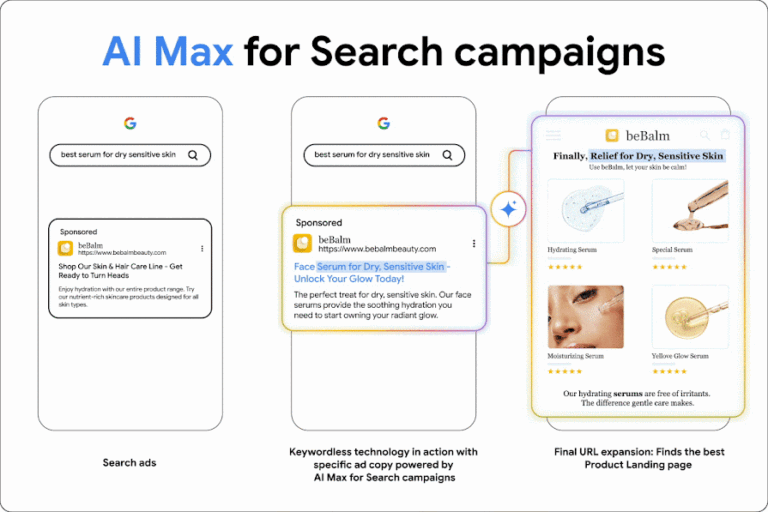
Google says AI Mode is particularly useful for complex comparisons. It can use “query fan-out,” running multiple related searches across different subtopics before forming a response. A detailed comparison page may answer several of those searches at once. Google’s official guidance also confirms that the usual SEO foundations still apply.
The catch is that the page must offer a real comparison.
“Us versus everyone else, and we win every category” is an advertisement wearing a table. Useful comparison content acknowledges differences, supports claims and explains which type of customer each option suits.
That honesty does not weaken the sales message. It makes the page more believable.
Your website cannot build the whole case alone
AI systems can encounter a brand through its own website, but also through reviews, directories, publications, customer stories and other third-party sources.
When those sources tell roughly the same story, the brand is easier to understand. When one calls it an enterprise platform, another describes it as a tool for freelancers and the website says almost nothing specific, confidence drops.
GEO therefore extends beyond rewriting a homepage. It includes strengthening the wider collection of signals that explains what the company is and where it belongs.
What should businesses do now?
Start by checking whether search engines and AI crawlers can access the site. OpenAI specifically recommends allowing OAI-SearchBot if you want content to appear in ChatGPT search.
Then look at the substance:
- Does each product or service page identify a specific audience and need?
- Do you answer the questions buyers ask before contacting you?
- Are important claims supported by examples or evidence?
- Can someone compare your offer with realistic alternatives?
- Is your brand described consistently across the web?
There is no special markup that guarantees inclusion in an AI answer. Google explicitly says that AI Mode does not require a separate optimization method or special schema. Strong technical SEO, accessible content, internal links and genuinely useful information remain the foundation.
Before creating another fifty pages, it is worth seeing what AI tools already know about your brand. Ranky’s free AI Visibility Check shows where you appear, which competitors are being recommended and what may be shaping the difference.
FAQ
Does SEO still affect ChatGPT and Google AI Mode visibility?
Yes. Crawlability, indexation, internal linking, authority and useful content all influence whether a page can be found and used.
Should every company create competitor comparison pages?
Only when the comparison helps a real buyer make a decision. Choose relevant competitors, use consistent criteria and avoid claims you cannot support.
How can I check whether ChatGPT recommends my brand?
Start with Ranky’s free AI Visibility Check. We assess whether your brand appears in relevant AI answers, how it is described, which competitors are recommended instead and what sources may be influencing those results. You’ll receive a practical snapshot of your current visibility and the most important opportunities to improve it.