Your paid media team has polished the campaign. Meanwhile, an old service page still promotes an offer you no longer sell.
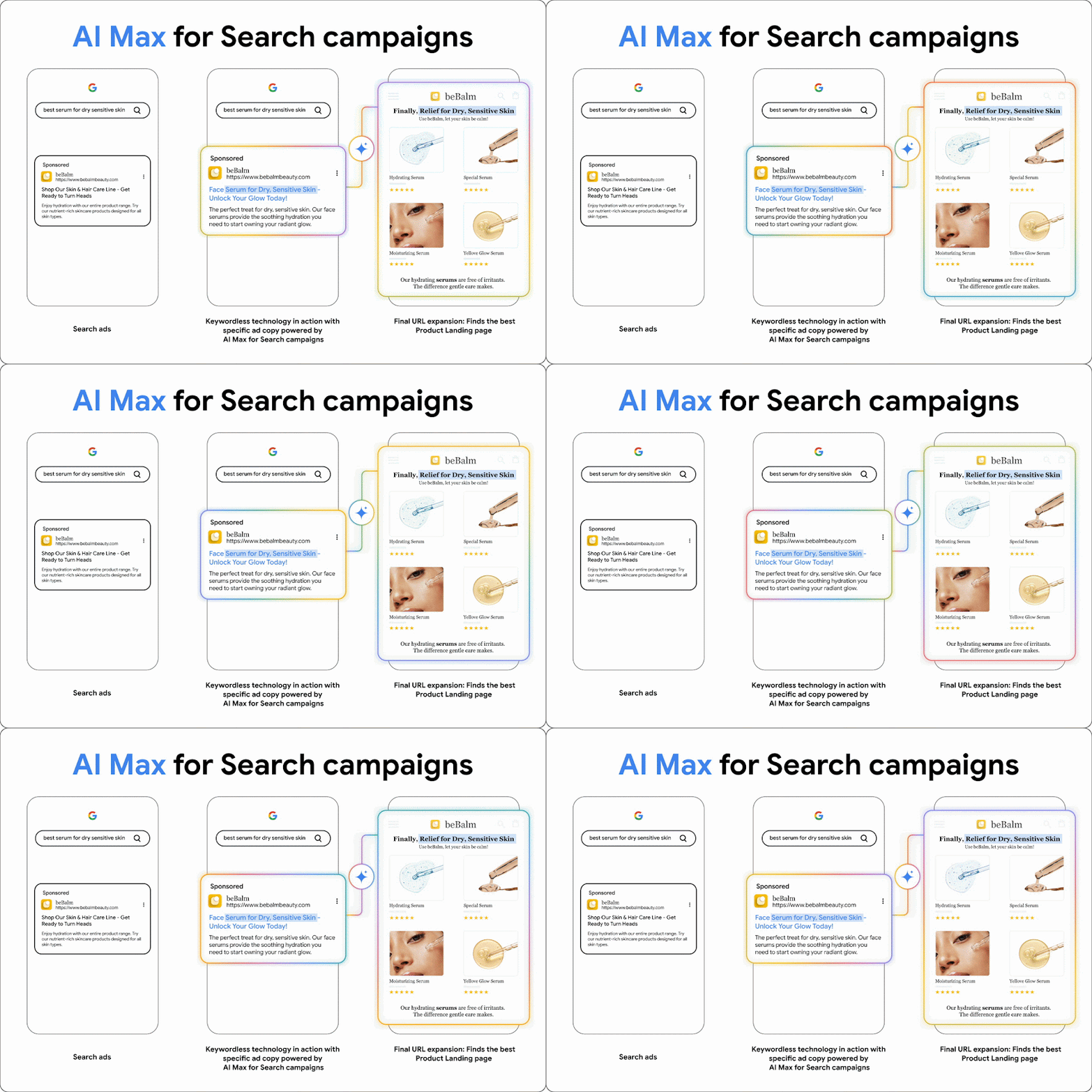
With Google AI Max, that disconnect deserves attention. When its text customization and final URL expansion settings are enabled, Google can draw on landing page content to create ad copy and send users to a relevant page beyond the URL you originally selected.
For marketers, this makes website maintenance part of campaign management. The pages your team considers “an SEO project” may also influence a paid customer’s first impression.
Why This Matters Now
On September 23, 2026, Google announced a new AI Max reporting feature intended to connect search terms, the creative assets users saw and the pages they reached in one view. Google said further details and availability would follow later this year, so it should not be treated as universally available today.
The announcement highlights a useful way to assess campaigns: look at the whole journey from query to message to destination.
Google AI Max is a suite of Search campaign enhancements covering search term matching, text customization and final URL expansion. These features make the content and structure of your website more relevant to how campaigns operate.
A Relevant Page Can Still Be a Poor Sales Destination
Imagine a consultancy advertising enterprise cybersecurity assessments. Its website also contains a small-business checklist and an outdated page about a discontinued starter package.
A page can discuss the right subject while presenting the wrong offer, audience or next step.
Google says final URL expansion selects pages relevant to the query and themed to the ad group. The marketer’s job is to check whether those destinations also make commercial sense.
Does the page describe the service accurately? Does it establish who qualifies? Can a buyer understand what happens after submitting the form?
More relevant traffic only helps if it reaches an experience that supports the sale.
What to Review Before Expanding a Campaign
Start with four checks:
- Offer accuracy: Update discontinued packages, old pricing and claims the business can no longer support.
- Page suitability: Decide which destinations should receive paid traffic. Use URL exclusions for unsuitable pages, or turn off final URL expansion when the campaign requires one fixed destination.
- Message consistency: Compare service pages, campaign assets and sales materials. They should agree on scope, audience and differentiators.
- Lead quality: Assess qualified enquiries and sales outcomes alongside conversion volume. A cheaper form submission can still be a poor prospect.
Google enables text customization and final URL expansion by default when you opt into AI Max, although you can change those settings. Review them deliberately before launch.
Where SEO, GEO and Paid Media Meet
This is a practical reason for teams to share their website audit.
Paid media needs accurate messages and suitable destinations. SEO needs useful, accessible pages with clear internal links. GEO work examines how the brand appears and is represented in AI answers.
These disciplines overlap in their source material, but their results need separate measurement. Improving a page for paid traffic does not establish that an AI system will recommend the brand.
At Ranky, we connect paid acquisition with SEO and GEO around the buyer’s journey. A useful starting point is checking what customers encounter before they contact you. Our free AI Visibility Check helps examine the AI discovery part of that picture.
Frequently Asked Questions
Is AI Max the same as advertising in Google AI Mode?
No. AI Max is a suite of Search campaign enhancements. AI Mode is a Google Search experience.
Can I control which pages receive AI Max traffic?
Yes. Google provides URL exclusions, and you can disable final URL expansion when you need a fixed destination.
Does AI Max replace SEO?
No. It supports paid Search campaigns. Organic visibility still requires separate SEO work.